
Now Reading: Goa Property Prices 2026: Essential Market Guide for Buyers and Investors
-
01
Goa Property Prices 2026: Essential Market Guide for Buyers and Investors

Goa Property Prices 2026: Essential Market Guide for Buyers and Investors


Table of Contents
- Goa Property Prices 2026: Market Overview
- North Goa Property Prices
- Assagao — The Luxury Hotspot
- Anjuna — Bohemian Meets Premium
- Vagator — Scenic Cliff Properties
- Siolim — Riverside Elegance
- Calangute — Commercial Hub
- Pernem — The New Growth Corridor
- South and Central Goa Property Prices
- Panjim — The Capital Advantage
- Benaulim — Peaceful South Goa
- Margao — The Commercial Capital
- Goa Property Prices 2026: Area Comparison Table
- Price Trend Analysis 2020–2026
- Investment Returns and Rental Yield
- Tax Implications for Property Buyers in Goa
- Legal Considerations and Due Diligence
- Infrastructure Driving Goa Property Prices in 2026
- Frequently Asked Questions
- Get Expert Help
Goa Property Prices 2026: Market Overview
Goa property prices 2026 reflect a market that has matured significantly over the past five years. What was once considered a purely vacation destination has transformed into one of India’s most sought-after real estate investment corridors. Buyers from Mumbai, Bangalore, Delhi, and overseas are actively purchasing residential and commercial properties across the state.
The Goa real estate market recorded a 12–18% average price appreciation between 2023 and 2025. This upward trajectory continues into 2026, driven by infrastructure developments like the Mopa International Airport, improved road connectivity, and a growing remote-work culture that has made Goa a permanent residence option for professionals.
In this complete market guide, we break down current property rates area by area, analyse investment potential, and provide actionable insights for both first-time buyers and seasoned investors looking at Goa property prices 2026.
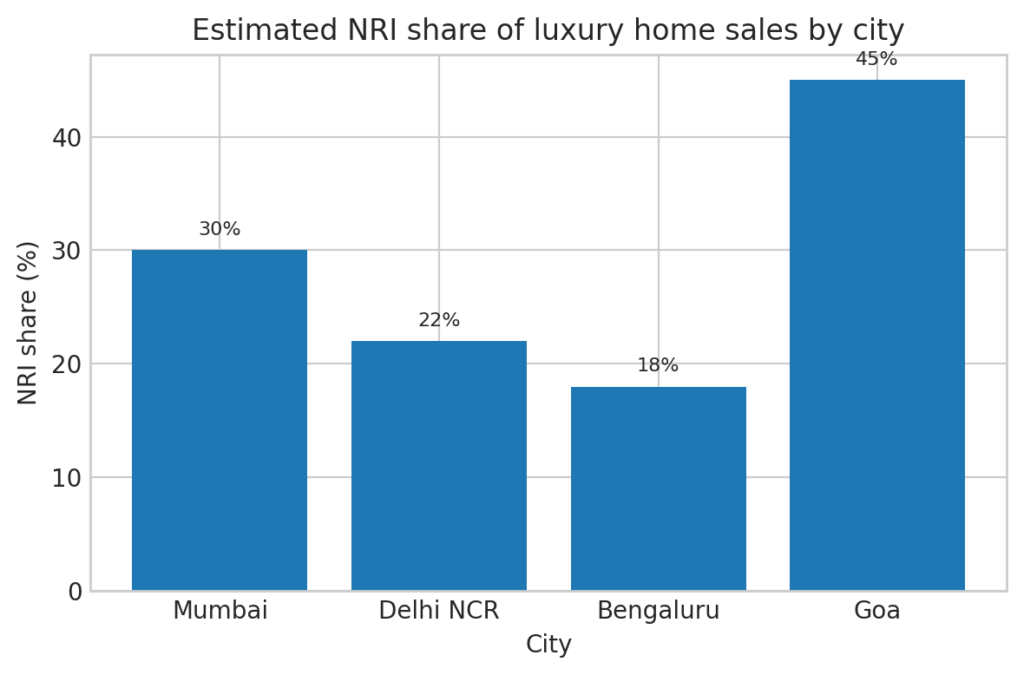
Whether you are an NRI exploring the NRI real estate investment process or a domestic buyer looking at your first property in Goa, understanding current pricing is essential to making a sound decision.
North Goa Property Prices
Note: All property prices quoted in this guide are indicative ranges based on market surveys and publicly available transaction data. Actual prices vary significantly by exact location, road frontage, plot shape, proximity to beaches, and current market conditions. Always verify current asking prices with local agents before making investment decisions.
North Goa remains the premium segment of the market. Proximity to popular beaches, a thriving hospitality scene, and well-established social infrastructure make it the first choice for lifestyle buyers and rental investors.
Land prices in North Goa range from Rs 15,000 to Rs 80,000 per square metre depending on the exact locality, road access, and zoning classification. Villa prices start at Rs 2 crore for basic constructions and can exceed Rs 15 crore for luxury estates with pool and garden.
Let us examine each major area in detail.

Assagao — The Luxury Hotspot
Assagao has firmly established itself as Goa’s most exclusive residential address. This quiet village, located between Anjuna and Mapusa, attracts high-net-worth buyers who value privacy, greenery, and proximity to premium dining and wellness establishments.
Current price range (2026):
- Land: Rs 40,000–Rs 80,000 per square metre
- Villas (3 BHK): Rs 4 crore–Rs 8 crore
- Luxury villas (4–5 BHK with pool): Rs 8 crore–Rs 15 crore
- Apartments: Rs 1.5 crore–Rs 3 crore
Assagao’s appeal lies in its village character combined with world-class amenities. Popular restaurants, boutique hotels, and yoga retreats line its narrow roads. The area has strict construction regulations that prevent high-rise development, preserving its low-density charm.
Rental yields in Assagao are among the highest in Goa. A well-furnished 3 BHK villa can generate Rs 8,000–Rs 15,000 per night during peak season (October to March). Annual rental yields range between 5% and 8% for professionally managed properties.
Investors should note that available land parcels in Assagao are shrinking. Most new transactions involve resale properties or subdivisions of larger estates. This limited supply is a key driver of continued price appreciation.
Anjuna — Bohemian Meets Premium
Anjuna carries decades of cultural heritage as Goa’s original bohemian hub. Today, it blends that creative energy with premium real estate development. The famous Anjuna flea market, beach clubs, and vibrant nightlife continue to attract both tourists and permanent residents.
Current price range (2026):
- Land: Rs 30,000–Rs 60,000 per square metre
- Villas (3 BHK): Rs 3 crore–Rs 7 crore
- Apartments (2 BHK): Rs 80 lakh–Rs 1.8 crore
- Row houses: Rs 1.5 crore–Rs 3 crore
Anjuna offers a wider variety of property types compared to Assagao. You will find everything from heritage Portuguese houses to modern apartment complexes. This diversity makes it accessible to a broader range of budgets.
The area benefits from excellent road connectivity to Mapusa (10 minutes) and Panjim (30 minutes). Proximity to Anjuna Beach and the Saturday night market ensures consistent tourist footfall, which supports short-term rental businesses.
For investors exploring the best areas to buy property in Goa, Anjuna offers a balanced combination of capital appreciation and rental income potential.
Vagator — Scenic Cliff Properties
Vagator is known for its dramatic cliffside views and relatively quieter beach setting. The area attracts buyers who want ocean views without the commercial bustle of Calangute or Baga.
Current price range (2026):
- Land: Rs 25,000–Rs 55,000 per square metre
- Villas (3 BHK): Rs 3.5 crore–Rs 7 crore
- Sea-view properties: Premium of 30–50% over standard rates
- Apartments: Rs 90 lakh–Rs 2 crore
Vagator’s unique selling point is its topography. Properties on the hilltops overlooking the Arabian Sea command significant premiums. The Chapora Fort area adds historical and scenic value to the locality.
New construction activity in Vagator is moderate. The Coastal Regulation Zone (CRZ) restrictions limit development close to the shoreline, which protects existing property values from oversupply. Buyers should verify CRZ clearance status before purchasing any property near the coast.
Siolim — Riverside Elegance
Siolim sits along the Chapora River and offers a distinctly different character from the beach-facing areas. Portuguese-era heritage homes, tree-lined roads, and a peaceful atmosphere make it popular with families and retirees.
Current price range (2026):
- Land: Rs 20,000–Rs 45,000 per square metre
- Villas (3 BHK): Rs 2.5 crore–Rs 6 crore
- Heritage properties: Rs 4 crore–Rs 10 crore (depending on condition and land size)
- Apartments: Rs 70 lakh–Rs 1.5 crore
Siolim has seen steady appreciation due to its central location. It provides easy access to both Anjuna (south) and Morjim (north). The Siolim bridge connects to Chopdem, opening access to the quieter northern beaches.
Heritage property restoration is a growing niche in Siolim. Buyers purchase old Portuguese houses and convert them into boutique stays or private residences. These projects require careful navigation of heritage preservation rules but can yield excellent returns.

Calangute — Commercial Hub
Calangute is Goa’s most commercially active beach area. High tourist volumes, numerous hotels, and a dense commercial strip make it primarily an income-generating market rather than a lifestyle choice.
Current price range (2026):
- Land: Rs 35,000–Rs 70,000 per square metre
- Commercial properties: Rs 50,000–Rs 1,00,000 per square metre
- Apartments (2 BHK): Rs 60 lakh–Rs 1.5 crore
- Service apartments: Rs 80 lakh–Rs 2 crore
Calangute’s property market is heavily influenced by tourism economics. Commercial property near the main beach road commands premium prices due to guaranteed foot traffic. However, residential property here tends to appreciate slower than in quieter areas like Assagao or Siolim.
Investors focused on consistent rental income rather than capital appreciation may find Calangute attractive. Service apartments and hotel rooms offer year-round occupancy rates of 60–75%.
Pernem — The New Growth Corridor
Pernem taluka has emerged as the most exciting growth story in Goa’s real estate market. The opening of the Mopa International Airport (now Dabolim-Mopa dual airport system) has transformed this once-overlooked northern region into a high-potential investment zone.
Current price range (2026):
- Land: Rs 8,000–Rs 20,000 per square metre
- Villas (3 BHK): Rs 1 crore–Rs 3 crore
- Plots (ready for construction): Rs 25 lakh–Rs 80 lakh
- Apartments: Rs 40 lakh–Rs 90 lakh
Pernem offers the most affordable entry point into the Goa property market. Land prices here are 50–70% lower than in established North Goa beach areas. The Mopa International Airport is the primary catalyst, but road upgrades and the proposed railway station expansion add further growth potential.
Areas like Arambol, Mandrem, and Ashwem within Pernem taluka already attract a steady stream of international tourists and long-stay visitors. As infrastructure improves, property values are expected to appreciate 15–25% over the next three years.
For a detailed breakdown of location strategy, read our Goa real estate investment guide.
South and Central Goa Property Prices
South and Central Goa offer a fundamentally different market dynamic. Prices are lower, plots are larger, and the pace of life is slower. These areas attract buyers seeking peaceful permanent residences, retirement homes, and large-scale agricultural or hospitality investments.
Panjim — The Capital Advantage
As Goa’s capital city, Panjim offers urban infrastructure that no other area in the state can match. Government offices, hospitals, educational institutions, and commercial centres make it the practical choice for families and professionals.
Current price range (2026):
- Apartments (2 BHK): Rs 60 lakh–Rs 1.5 crore
- Apartments (3 BHK): Rs 1 crore–Rs 2.5 crore
- Commercial space: Rs 40,000–Rs 80,000 per square metre
- Plots: Rs 20,000–Rs 50,000 per square metre
Panjim’s Fontainhas area (Latin Quarter) is a UNESCO-recognized heritage zone. Properties here carry premium pricing but also face strict renovation guidelines. The Campal and Miramar areas offer waterfront apartments with modern amenities.
Tonca, Caranzalem, and Dona Paula are popular residential suburbs with good schools and healthcare access. These areas have seen steady 8–12% annual appreciation driven by genuine residential demand rather than speculative investment.
Benaulim — Peaceful South Goa
Benaulim represents the quintessential South Goa experience. Wide beaches, coconut groves, and a laid-back atmosphere attract buyers who prioritise tranquillity over nightlife.
Current price range (2026):
- Land: Rs 10,000–Rs 25,000 per square metre
- Villas (3 BHK): Rs 1.5 crore–Rs 4 crore
- Apartments: Rs 45 lakh–Rs 1.2 crore
- Beach-adjacent plots: Rs 20,000–Rs 35,000 per square metre
Benaulim benefits from proximity to the Dabolim Airport (20 minutes) and Margao railway station (15 minutes). Several luxury resort brands operate in the area, which supports the short-term rental market.
The area is increasingly popular with retirees from Mumbai and Bangalore. Gated community projects with healthcare facilities and community centres are a growing segment.
Margao — The Commercial Capital
Margao is South Goa’s commercial and transportation hub. The Madgaon railway junction connects Goa to Mumbai, Bangalore, and Delhi via the Konkan Railway. This connectivity makes Margao a practical choice for residents who travel frequently.
Current price range (2026):
- Apartments (2 BHK): Rs 40 lakh–Rs 90 lakh
- Apartments (3 BHK): Rs 70 lakh–Rs 1.5 crore
- Commercial space: Rs 30,000–Rs 60,000 per square metre
- Plots: Rs 12,000–Rs 30,000 per square metre
Margao’s real estate market is driven by local demand. Unlike North Goa, where tourism and lifestyle buying dominate, Margao sees purchases from Goan families, government employees, and small business owners. This creates a stable, less volatile market.
New residential projects in areas like Aquem, Fatorda, and Navelim offer modern apartments at prices significantly below North Goa equivalents. For budget-conscious buyers, Margao provides excellent value.
Goa Property Prices 2026: Area Comparison Table
The following table summarises Goa property prices 2026 across all major areas to help you compare at a glance.
| Area | Land (Rs/sq m) | Villa (3 BHK) | Apartment (2 BHK) | Rental Yield | 5-Year Appreciation |
|---|---|---|---|---|---|
| Assagao | 40,000–80,000 | 4–15 Cr | 1.5–3 Cr | 5–8% | 60–80% |
| Anjuna | 30,000–60,000 | 3–7 Cr | 80 L–1.8 Cr | 5–7% | 50–70% |
| Vagator | 25,000–55,000 | 3.5–7 Cr | 90 L–2 Cr | 4–7% | 45–65% |
| Siolim | 20,000–45,000 | 2.5–6 Cr | 70 L–1.5 Cr | 4–6% | 40–60% |
| Calangute | 35,000–70,000 | 3–6 Cr | 60 L–1.5 Cr | 6–9% | 30–45% |
| Pernem | 8,000–20,000 | 1–3 Cr | 40–90 L | 3–5% | 70–100% |
| Panjim | 20,000–50,000 | 2–5 Cr | 60 L–1.5 Cr | 3–5% | 35–50% |
| Benaulim | 10,000–25,000 | 1.5–4 Cr | 45 L–1.2 Cr | 3–5% | 30–45% |
| Margao | 12,000–30,000 | 1–3 Cr | 40–90 L | 3–4% | 25–40% |
Price Trend Analysis 2020–2026
Understanding how Goa property prices have evolved helps predict future movements. Here is a year-by-year overview of average price changes across the state.
2020: The COVID-19 pandemic initially caused a 5–10% dip in transaction volumes. However, prices held relatively stable because sellers were not under distress pressure. Few new projects launched during this period.
2021: The “work from anywhere” trend triggered a surge in demand. Professionals from Mumbai and Bangalore began purchasing homes in Goa. Average prices rose 8–12% in North Goa and 5–8% in South Goa.
2022: Continued strong demand. The announcement of the Mopa Airport opening caused a significant spike in Pernem area prices (20–30% increase). North Goa premium areas saw 10–15% appreciation.
2023: The Mopa Airport became operational. Transaction volumes hit record levels. Institutional investors and branded developers entered the Goa market. Average appreciation was 12–18% across the state.
2024: Market consolidation. Price growth moderated to 8–12% as the initial post-pandemic rush stabilised. Quality projects continued to appreciate, while poorly located or poorly constructed properties saw slower growth.
2025: Selective appreciation. Premium areas (Assagao, Anjuna, Siolim) grew 10–15%. Emerging areas (Pernem, South Goa) grew 12–20%. The mid-market segment showed the most balanced growth.
2026 (current): The market is in a steady growth phase. Prices are expected to appreciate 8–15% across most areas. Infrastructure progress (road upgrades, Mopa Airport phased expansion) will continue to support values.
Investment Returns and Rental Yield
Goa offers two distinct return streams for property investors: capital appreciation and rental income. Understanding both is critical to making informed investment decisions.
Capital appreciation in Goa has outperformed many other Indian real estate markets over the past five years. While Mumbai and Bangalore saw 5–8% annual growth, North Goa recorded 10–18% in premium pockets.
Rental yields vary significantly by location and property type. Short-term vacation rentals generate the highest per-night rates but require active management. Long-term rentals provide steady income with minimal effort.
A typical investment scenario: A 3 BHK villa purchased in Anjuna for Rs 4 crore in 2023 is now valued at approximately Rs 5.2–5.5 crore in 2026. If operated as a vacation rental, it would generate Rs 15–25 lakh per year in net rental income after management fees and maintenance.
For a detailed guide on making smart property investments, visit our smart home investment guide.
Rental Income by Property Type
- Luxury villa (pool, 4+ bedrooms): Rs 10,000–Rs 25,000 per night (peak season)
- Standard villa (3 BHK): Rs 5,000–Rs 12,000 per night (peak season)
- Apartment (2 BHK, furnished): Rs 2,000–Rs 5,000 per night (peak season)
- Long-term rental (unfurnished): Rs 15,000–Rs 50,000 per month depending on area
Peak season in Goa runs from October to March. Off-season rates typically drop by 40–60%. Professional property management companies charge 15–25% of rental income.
Tax Implications for Property Buyers in Goa
Understanding the tax landscape is essential when evaluating Goa property prices 2026. Several taxes and duties apply to property transactions in Goa.
Stamp Duty and Registration
Goa charges stamp duty based on the property value. The current rates are:
- Stamp duty: 3.5% (up to Rs 50 lakh), 4% (Rs 50 lakh–Rs 75 lakh), 4.5% (Rs 75 lakh–Rs 1 crore), 5% (Rs 1 crore–Rs 5 crore), 6% (above Rs 5 crore)
- Registration fee: 1% of property value (minimum Rs 1,000)
- Town planning fee: 1% (applicable in municipal areas)
Goa’s stamp duty rates are among the lowest in India, making it a cost-effective state for property purchases compared to Maharashtra (6–7%) or Kerala (8%).
Capital Gains Tax
If you sell a property in Goa, capital gains tax applies:
- Short-term (held less than 2 years): Taxed at your income tax slab rate
- Long-term (held more than 2 years): 12.5% without indexation (as per the July 2024 Budget amendments). For properties acquired before 23 July 2024, resident individuals and HUFs can opt for 20% with indexation if it results in a lower tax.
You can claim exemption under Section 54 by reinvesting the capital gains in another residential property, or under Section 54EC by investing in specified bonds.
Rental Income Tax
Rental income from Goa property is taxable. You can deduct 30% as standard deduction and claim interest on home loan as an additional deduction. GST applies to short-term rentals above Rs 7,500 per night for registered businesses.
NRI buyers face additional TDS requirements. For detailed NRI-specific tax guidance, refer to our NRI property buying process guide.
Legal Considerations and Due Diligence
Goa has unique legal frameworks that every buyer must understand. Due diligence in Goa requires more attention than in many other Indian states due to its Portuguese-era land records and complex community ownership structures.
Land Types in Goa
- Comunidade land: Community-owned land that cannot be sold outright. Only lease rights can be transferred. Avoid purchasing Comunidade land unless you have expert legal guidance.
- Private (survey) land: Land with clear private ownership. This is the safest category for purchase.
- Government land: Cannot be purchased. Some properties encroach on government land — verify boundaries carefully.
- Mundkarial land: Land with tenant (mundkar) rights. The Mundkar Act gives tenants significant protections. Clear mundkar rights before purchasing.
Essential Documents to Verify
- Form I and XIV (land record extracts from the Mamlatdar office)
- Sanad (survey plan from the Survey Department)
- Conversion order (if agricultural land is being converted to settlement)
- ODP (Outline Development Plan) zone classification
- CRZ clearance (for coastal properties)
- RERA registration (for under-construction projects) — verify on Goa RERA portal
- Encumbrance certificate (past 30 years recommended)
For more details on RERA verification, read our guide on RERA approved projects in Goa.
Common Legal Pitfalls
Buyers frequently encounter these issues in Goa:
- Properties sold without clearing Comunidade dues
- Encroachment on government or Comunidade land not visible in documents
- Outdated survey records that do not match ground reality
- Power of Attorney sales without proper court validation
- Illegal construction in CRZ zones
Always engage a local Goa-based property lawyer who specialises in real estate transactions. Do not rely solely on the seller’s documentation.
Infrastructure Driving Goa Property Prices in 2026
Several infrastructure projects are actively shaping Goa property prices 2026 and will continue to influence values over the next five years.
Mopa International Airport
The Mopa International Airport (officially Manohar International Airport) in North Goa has been a game-changer. Operating since 2023, it has reduced travel time to North Goa destinations significantly. The airport is being developed in four phases — Phase 1 (current) handles 4.4 million passengers, with expansion planned to 5.8 million (Phase 2), 9.4 million (Phase 3), and ultimately 13.1 million passengers annually upon full build-out by 2045.
Properties within a 15-km radius of Mopa have seen the highest appreciation rates in the state. Pernem, Arambol, and the surrounding areas are direct beneficiaries.
Road Infrastructure
The National Highway 66 upgrade, the Zuari Bridge duplication, and several state highway improvements have enhanced connectivity between North and South Goa. Drive times have been reduced by 20–30% on key routes.
Railway Expansion
The Konkan Railway double-tracking project will improve train connectivity to Mumbai and Bangalore. A proposed halt station near Pernem would further boost North Goa’s accessibility.
Smart City Mission
Panjim is part of the Government of India’s Smart City Mission. Projects include improved sewage systems, smart traffic management, waterfront development, and digital governance. These improvements are gradually increasing property values in the capital area.
For a comprehensive overview of Goa’s real estate landscape, visit our Goa real estate page.
Frequently Asked Questions
What is the average property price per square metre in Goa in 2026?
Goa property prices 2026 range from Rs 8,000 per square metre in Pernem to Rs 80,000 per square metre in Assagao. The state average for residential plots is approximately Rs 25,000–Rs 30,000 per square metre.
Is Goa property a good investment in 2026?
Yes. Goa has consistently delivered 10–18% annual appreciation in premium areas over the past five years. Rental yields of 4–8% add to the returns. Infrastructure development and limited land supply support continued growth.
Can NRIs buy property in Goa?
Yes, NRIs (Non-Resident Indians) can buy residential and commercial property in Goa under FEMA regulations. Agricultural land and plantation property require RBI approval. Read our detailed NRI real estate investment guide for the complete process.
What are the cheapest areas to buy property in Goa?
Pernem (North Goa), Margao, and Benaulim (South Goa) offer the most affordable entry points. Land in Pernem starts at Rs 8,000 per square metre, while apartments in Margao start at Rs 40 lakh.
How much stamp duty is payable in Goa?
Stamp duty in Goa ranges from 3.5% to 6% depending on the property value (five slabs from up to Rs 50 lakh through above Rs 5 crore). Registration fees add approximately 1%. Goa’s stamp duty rates are among the lowest in India.
What documents do I need to buy property in Goa?
Essential documents include Form I and XIV, Sanad (survey plan), conversion order (for agricultural land), ODP compliance certificate, CRZ clearance (for coastal properties), and RERA registration (for projects). An encumbrance certificate covering the past 30 years is also recommended.
Are property prices in North Goa higher than South Goa?
Yes. North Goa property prices are generally 2–4 times higher than South Goa equivalents. This premium reflects stronger tourism infrastructure, better nightlife and dining options, and higher rental demand.
What is the rental yield on Goa property?
Rental yields in Goa range from 3% (long-term rentals in South Goa) to 8% (professionally managed vacation villas in North Goa). Short-term rental properties in Assagao, Anjuna, and Calangute generate the highest yields.
Get Expert Help with Your Goa Property Search
Navigating Goa property prices 2026 requires local expertise and market knowledge. Whether you are a first-time buyer, a seasoned investor, or an NRI looking at Goa from overseas, our team at Proptys can guide you through every step.
We provide personalised property recommendations, legal due diligence support, and end-to-end transaction management. Our deep understanding of the Goa market ensures you make an informed, confident purchase.
Contact Proptys today for a free consultation on buying property in Goa. Let us help you find the right property at the right price.
Summary: Goa Property Prices 2026
Goa property prices 2026 reflect a maturing market with strong fundamentals. Across North and South Goa, Goa property prices 2026 range from Rs 40 lakh for entry-level apartments to Rs 20 crore for ultra-premium villas. Understanding Goa property prices 2026 at a micro-market level is essential for making informed investment decisions.
Key trends shaping Goa property prices 2026 include limited land supply, Mopa airport-driven growth, and sustained NRI demand. Whether you are comparing Goa property prices 2026 for rental yield or capital appreciation, this guide provides the data you need. Monitor Goa property prices 2026 quarterly for the latest market movements.
South Goa Property Prices 2026
South Goa property prices have moved more conservatively than the North, with the Cavelossim–Mobor and Palolem belts holding strong demand from second-home buyers. Average rates for premium villas range from ₹15,000–28,000 per sq ft, while plotted developments along the Margao–Cuncolim corridor sit at ₹3,500–6,500 per sq m for buildable land. Capital appreciation has averaged 8–12% per annum over the last three years, with rental yields of 5–8% on professionally managed villas.
Goa Property Rates Near Beach Areas
Beachfront and beach-proximity premiums vary sharply by location. Anjuna, Vagator and Morjim command the highest North Goa rates (₹40,000–80,000 per sq m for villas). Calangute and Candolim sit at ₹25,000–55,000 per sq m. South Goa beaches like Colva, Varca and Cavelossim trade at ₹18,000–35,000 per sq m. CRZ regulations limit construction in the No-Development Zone, which sustains scarcity at premium beachfronts and underwrites long-term capital growth.
For buyers focused on entering the Goa market, our complete Goa real estate investor’s guide walks through buyer eligibility, RERA verification, and capital structuring. To browse curated luxury Goa villas and properties, see listiing.com’s verified inventory.

Related Posts


Stay Informed With the Latest & Most Important News
Previous Post
Next Post