

Now Reading: Plots for Sale in Goa: Land Investment Guide 2026 — Prices, Zones and Legal Checklist
-
01
Plots for Sale in Goa: Land Investment Guide 2026 — Prices, Zones and Legal Checklist

Plots for Sale in Goa: Land Investment Guide 2026 — Prices, Zones and Legal Checklist

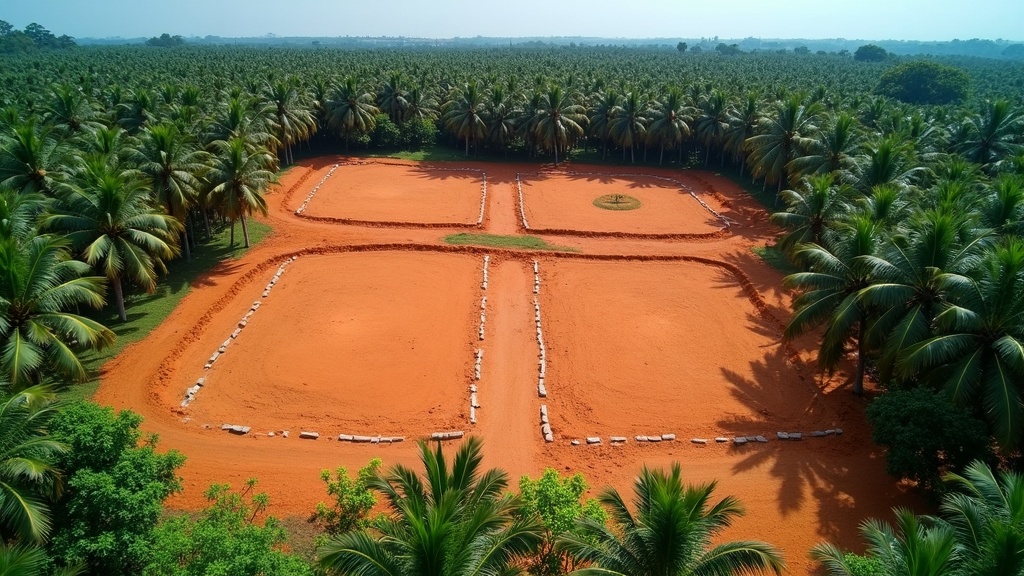

Buyers searching for plots for sale in Goa in 2026 will find a market that has moved substantially in the past three years — not just in price, but in the regulatory requirements, documentation standards, and buyer profile that define a credible transaction. Land investment in Goa is fundamentally different from buying a built villa: there is no tenanted asset generating income on day one, the legal due diligence is more complex, and the value creation timeline is longer. But for buyers who understand the process, plots for sale in Goa offer a different risk-return profile — particularly in micro-markets where price appreciation on raw land has historically outpaced built property returns.
This guide uses verified price data from published 2025–2026 market sources, official government portals for regulatory requirements, and MagicBricks’ 2026 stamp duty schedule. No prices or projections have been estimated or extrapolated. Where a data point is from a single source, that source is cited explicitly.
Table of Contents
Land prices in Goa vary enormously by location, proximity to the coast, zoning classification, and whether a valid Conversion Sanad (agricultural-to-non-agricultural land conversion) exists. The following price ranges are sourced from plotsgoa.com’s 2026 land rates guide, which aggregates active listing data. These are market rates, not Ready Reckoner (government circle) rates — actual transaction prices will vary based on specific plot characteristics, road access, and documentation completeness.
Types of Land for Sale in Goa
Not all plots for sale in Goa are the same type. Understanding the classification of land you are buying determines what you can build, how quickly you can build, and what additional approvals you need.
Residential / Non-Agricultural (NA) Plots
An NA plot is one where the Conversion Sanad — the document converting the land from agricultural to non-agricultural use — has already been obtained. On an NA plot within the Settlement Zone (S-Zone) of Goa’s Regional Plan 2021, you can apply directly for a building plan to the Town and Country Planning Department (TCP) or the relevant local authority. These plots are the most straightforward to buy and build on, and they typically command a significant price premium over unconverted agricultural land.
Agricultural Land
Agricultural land in Goa is the majority of the land area in the state but cannot be developed until it has been converted. The buyer of agricultural land must apply for and obtain a Conversion Sanad from the Collector before any construction can take place. Many plots marketed as “land for sale in Goa” at lower price points are agricultural land — buyers should factor in the cost, time, and uncertainty of the conversion process into their acquisition analysis. Not all agricultural land is convertible: plots within eco-sensitive zones, notified forest land, or areas restricted under the Regional Plan may not receive conversion approval.
Coastal / CRZ-Classified Land
Land within the Coastal Regulation Zone (CRZ) in Goa is governed by the Coastal Regulation Zone Notification 2019 and related Coastal Zone Management Plans (CZMPs). While CRZ regulations broadly extend up to 500 metres from the High Tide Line (HTL), the key restriction for development is the applicable No Development Zone (NDZ) within that coastal belt. Under the 2019 framework, CRZ-III A areas (densely populated rural coastal areas) may permit reduction of the NDZ from 200 metres to 50 metres from the HTL, subject to approved CZMP classifications and regulatory implementation. However, this does not automatically make all land between 50–200 metres buildable, as development permissions in Goa depend on the exact survey number, CRZ category, CZMP mapping, and approvals from the Goa Coastal Zone Management Authority (GCZMA). Buyers evaluating coastal plots or villas should therefore verify the precise CRZ classification and development permissibility of the specific property rather than relying solely on distance from the shoreline.

Legal Checklist for Buying a Plot in Goa
Plot purchases in Goa require more legal due diligence than buying a built property because the title chain is longer and the regulatory compliance is more fragmented. The following checklist is the minimum verification required before signing any agreement to sell.
Form I and XIV
Form I and XIV is Goa’s primary land ownership record under the Portuguese-era Land Revenue Code. It is the equivalent of a title deed in other Indian states. For any plot you are considering, verify Form I and XIV at the Mamlatdar’s office for the relevant taluka — or obtain a digitally signed certified copy through Goa Online’s revenue department portal. The name on Form I and XIV must match the seller’s name exactly. Any recent mutation (change of ownership) should be visible in the record. Gaps or inconsistencies in the mutation chain are red flags requiring legal investigation before proceeding.
Conversion Sanad (for Agricultural Land)
If the plot is classified as agricultural land, you need a valid, in-force Conversion Sanad before any construction is permitted. Under Section 32 of the Goa Land Revenue Code, land converted from agricultural to non-agricultural use requires this document from the Collector (for plots above 500 sq m) or the Deputy Collector and Sub-Divisional Officer (for plots below 500 sq m). Source: North Goa District official portal.
As of February 2026, the processing timeline for Conversion Sanad applications has been reduced to 45 days under Goa’s Ease of Doing Business (EODB) reforms. However, this 45-day target applies to complete applications — incomplete submissions restart the clock. Source: Lawsathi, citing the Goa EODB Dashboard updated February 2026.
Buyers should also verify that any Conversion Sanad presented by the seller is not forged or lapsed. A genuine sanad is issued by the government and can be cross-checked at the relevant Collectorate office. Do not rely solely on a photocopy or scanned version from the seller without independent verification.
TCP Zoning and Regional Plan 2021
Goa’s Regional Plan 2021 defines what can be built in different zones across the state. The key distinction for plot buyers is whether the land falls within the Settlement Zone (S-Zone), which allows residential and commercial development, versus other zones (Orchard Zone, Natural Zone, Green Zone) where construction is restricted or prohibited. Your plot’s zoning classification determines what you can build, the permissible Floor Area Ratio (FAR), and whether you can obtain a building plan from the TCP Department. Check the relevant zone designation for the specific survey number on the TCP Department’s online map before proceeding with any purchase. Properties described as “residential plots” that fall outside the S-Zone require additional scrutiny.
CRZ Permission (for Coastal Plots)
For any plot within 500 metres of the coastline, verify the CRZ classification of the specific survey number — not just the general locality. Required documentation for coastal plots includes a CRZ Permission from the GCZMA specific to the survey number, approved building plans showing the setback from the High Tide Line, and a survey report from a government-authorised agency confirming the HTL and Low Tide Line positions. Source: Prime Realty Goa CRZ Guide 2025.
Village Panchayat NOC and Clearances for Land for Sale Goa Purchases
Before registration, buyers of land for sale in Goa need to obtain or verify the following (Source: PropertyWala North Goa Property Registration Guide 2025):
- Village Panchayat NOC: Confirming no outstanding dues or disputes on the land from the local body.
- Mutation certificate: Confirms the seller’s name is current in revenue records.
- Title search (30-year chain): A Goa-based property lawyer typically conducts this, verifying there are no encumbrances, disputes, or adverse claims in the title chain going back 30 years.
- E-stamp paper: As of April 1, 2026, e-stamping is mandatory for all Goa property transactions exceeding ₹9,999. Physical stamp papers are being phased out. Source: buildersandbrokers.com, citing Goa government e-stamping mandate.
Stamp Duty and Registration Costs for Plots in Goa
The same stamp duty and registration structure applicable to built properties in Goa applies to land and plots. The following table is from MagicBricks’ Stamp Duty in Goa 2026 guide, updated for the current rates. Buyers should also verify applicable rates at the official Goa registration portal at the time of transaction, as rates are revised periodically.
| Market Value of Plot | Stamp Duty | Registration Charges |
|---|---|---|
| Up to ₹50 lakh | 3.5% | 3% |
| Above ₹50 lakh to ₹75 lakh | 4.5% | 3% |
| Above ₹75 lakh to ₹1 crore | 4.5% | 3.5% |
| Above ₹1 crore | 5% | 3.5% |
| Above ₹5 crore | 6% | 3.5% |
Source: MagicBricks Stamp Duty in Goa 2026. These rates are for Sale Deeds. An Agreement for Sale attracts 2.9% stamp duty + 3% registration. Note that stamp duty is computed on the higher of the transaction value or the Ready Reckoner (circle) rate, not just the agreed price.
NRI Rules for Buying Land for Sale in Goa
The rules for NRIs buying plots for sale in Goa are the same as for any property in India — with important exceptions specific to land type:
- Residential and commercial plots: NRIs and Persons of Indian Origin (PIOs) can purchase residential and commercial land in Goa without RBI approval, under FEMA. Funds must be routed through NRE or NRO accounts.
- Agricultural land: NRIs and PIOs cannot purchase agricultural land, farmhouses, or plantation property in India without specific RBI approval. This is a national restriction, not specific to Goa. A plot being sold as “agricultural land” or one that has not yet received its Conversion Sanad is classified as agricultural land for FEMA purposes until the conversion is complete.
- Home loans for land: NRIs can avail home loans from Indian banks for plot purchases (not just construction). However, banks typically require a Conversion Sanad and a construction plan as conditions for disbursement — pure agricultural land plots are generally not financeable.
Risks of Buying a Plot in Goa
Land investment in Goa carries its own specific risks that are different from buying a built villa. Buyers should evaluate each of these before committing to a plot purchase.
- Conversion denial: If you buy agricultural land expecting to obtain a Conversion Sanad and are subsequently denied (due to eco-sensitive zone status, rejected application, or legal challenge from a third party), you own a plot you cannot legally build on. A purchase subject to conversion approval being granted is the safest structure for agricultural land.
- Title disputes: Goa’s Portuguese-era land records are complex, and disputes between family members, co-heirs, or between historical records and ground-level occupation are not uncommon. A 30-year title search by a qualified Goa property lawyer is essential — not optional.
- Boundary encroachment: Goa’s land survey records were last officially resurveyed during the Portuguese era. Ground-level boundaries may differ from what is shown in Form I and XIV. A private survey by a government-licensed surveyor before purchase helps establish actual plot dimensions.
- Zero income during holding period (plot Goa idle cost): Unlike a rented villa, raw land generates zero income while you hold it. Any capital you deploy in a plot purchase is locked until you either develop, lease, or resell the land. Factor in opportunity cost and the timeline to construction (typically 2–4 years for a new development including approvals).
- TCP and Regional Plan amendments: Goa’s Regional Plan is periodically revised. A zone classification change can affect what is permissible on a given plot. While changes to the Regional Plan are subject to public consultation, they introduce regulatory uncertainty for long-term land holders.
- Liquidity: Plots for sale in Goa can take longer to sell than built villas, because the buyer pool is smaller (buyers must manage their own construction process) and due diligence requirements are more complex. Exit timelines of 18–36 months for fair-value resale are realistic.
FAQs: Plots for Sale in Goa
Can I buy agricultural land for sale in Goa?
Resident Indians can buy agricultural land in Goa, but NRIs and PIOs cannot without specific RBI approval under FEMA. For resident Indians, agricultural land can be purchased but cannot be developed without a Conversion Sanad (converting it from agricultural to non-agricultural use) issued by the Collector or Deputy Collector. If conversion is denied, the land cannot be built on. Structuring any agricultural land purchase subject to conversion approval is the safest approach.
What documents do I need to check when buying a plot in Goa?
The minimum documentation checklist for any plot purchase in Goa includes: Form I and XIV (Goa’s primary land ownership record), Conversion Sanad (if purchasing agricultural land or land that was previously agricultural), TCP zoning certificate confirming the land is in the Settlement Zone, Village Panchayat NOC, 30-year title search by a qualified Goa property lawyer, and CRZ permission from GCZMA (for plots within 500 metres of the coast). As of April 2026, e-stamping is mandatory for all transactions above ₹9,999.
What is the stamp duty for buying a plot in Goa?
Stamp duty for plots in Goa follows the same progressive slab structure as built property: 3.5% for values up to ₹50 lakh; 4.5% for ₹50–75 lakh; 4.5% for ₹75 lakh–₹1 crore; 5% for above ₹1 crore; and 6% for above ₹5 crore. Registration charges are an additional 3% (below ₹75 lakh) or 3.5% (above ₹75 lakh). Source: MagicBricks Stamp Duty in Goa 2026. Stamp duty is computed on the higher of the agreed price or the government Ready Reckoner rate.
Conclusion
Plots for sale in Goa represent a genuine investment opportunity for buyers who approach the process with the same rigour as any other capital allocation decision. The price range is wide — from underdeveloped interior areas to for prime coastal plots — and the right choice depends on your development timeline, income requirement, NRI status, and risk appetite. The due diligence requirements are non-negotiable: Form I and XIV, Conversion Sanad status, TCP zoning, and a 30-year title search are the foundation of any credible purchase, not optional extras. Buyers who skip this process in pursuit of speed or price savings typically encounter problems at the construction or resale stage that cost significantly more to resolve than the initial legal fees would have.
If you are evaluating specific plots for sale in Goa and want independent guidance on due diligence requirements or market pricing for a particular micro-market, submit your enquiry below and our team will respond within 24 hours.

Related Posts



Stay Informed With the Latest & Most Important News
Previous Post
Next Post