
Now Reading: Kadamba Plateau Goa Investment Guide 2026: Why Panjim’s Plateau Is the Smartest Address in North Goa
-
01
Kadamba Plateau Goa Investment Guide 2026: Why Panjim’s Plateau Is the Smartest Address in North Goa

Kadamba Plateau Goa Investment Guide 2026: Why Panjim’s Plateau Is the Smartest Address in North Goa

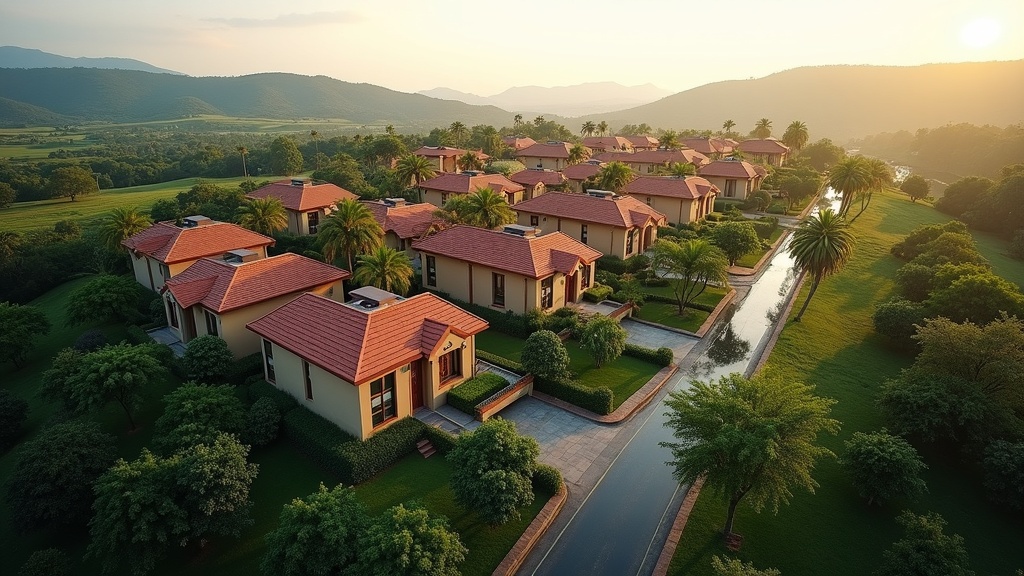

Ten years ago, Kadamba Plateau was a quiet upland east of Panjim that most Goans associated with a bus depot and a petrol station. In 2026, it’s quietly become the most consequential residential micro-market in North Goa — the address where working professionals, NRIs and second-home buyers have been converging while everyone else has been arguing about Anjuna versus Assagao. If you’re building a long-term Goa portfolio, this is one sub-market you can’t really skip past.
This guide unpacks what the Kadamba Plateau Goa opportunity actually looks like in 2026 — the connectivity, the major projects, who it actually suits, what the rental story really is, and where the risks sit. We’ve deliberately kept per-square-foot prices out of it. The gap between asking prices and transacted prices in this market is still wide enough that any number we put on the page would do more harm than good. Where ranges genuinely matter — yields, occupancy bands — we’ll give you honest ranges.
Table of Contents
Where Exactly Is Kadamba Plateau in Goa?

Kadamba Plateau sits in Tiswadi taluka in North Goa, on elevated ground east of Panjim and just south of Old Goa. The official pin code for most of the address-belt is 403206; parts of the plateau fold into the 403001 Panjim grid for older addresses. By road, the central plateau is about 10 minutes from Panjim’s Atal Setu approach, 15 minutes from the Porvorim commercial belt, and within 35–45 minutes of the airport at Dabolim — and, more importantly for the next decade, 60–75 minutes from the Manohar International Airport at Mopa via NH-66.
The geography matters here. The plateau is genuinely elevated — high enough to escape the monsoon water-logging that gets parts of low-lying Tiswadi and Bardez. And the road grid was laid down in the 1980s for the Kadamba Transport Corporation depot, which means the arterial widths are wider than you’d find in a typical Goan village re-zoned for residential use. That legacy is why the plateau today has the unusual combination of clean, planned roads and proximity to the state capital that most Goan addresses simply don’t offer.
Why Kadamba Plateau Real Estate Has Quietly Outperformed
Kadamba Plateau has appreciated steadily through the last cycle for reasons that, unusually for Goa, have very little to do with the beach.
- Panjim’s overflow address. Panjim itself is land-locked — the river to the north, hills to the south, and a heritage protection envelope around the central grid mean almost no new residential supply can come into the city. Kadamba Plateau is the nearest contiguous land bank where modern apartment stock can actually be built. As Panjim densifies, the plateau is where new households go.
- The Mopa effect, second order. The Manohar International Airport at Mopa shifted the centre of gravity of North Goa. The first-order winners were the villages closest to Mopa itself. The second-order winner is the address that combines proximity to the state’s administrative capital and a viable run to both airports — and that’s Kadamba Plateau.
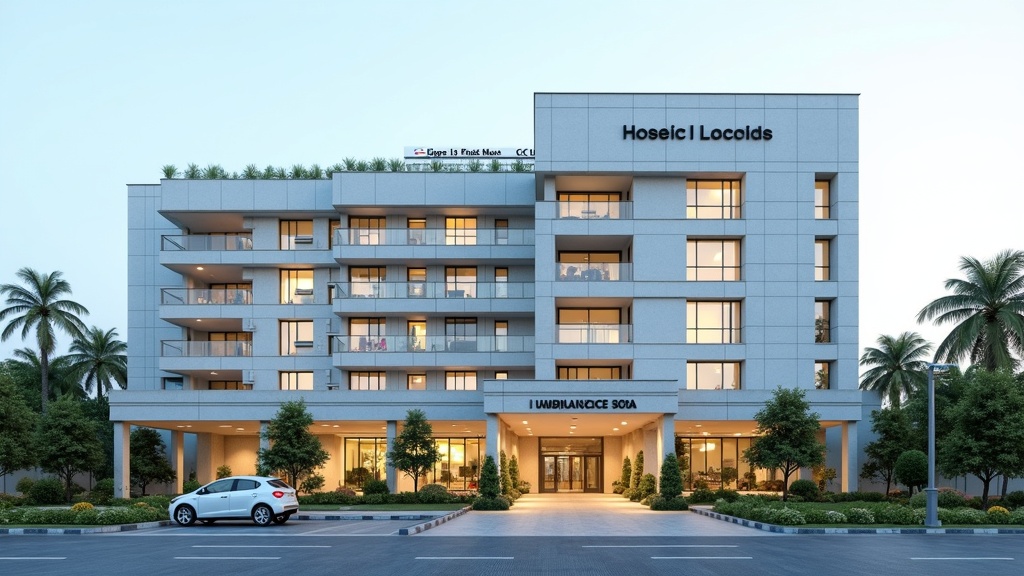
- Infrastructure depth. The plateau already has the Manipal-style 230-bed Healthway multi-speciality hospital catchment, several international schools within a 15-minute drive, the Goa Medical College a short hop south, and the Kadamba bus depot anchoring public transport. None of this is speculative — it’s in-place infrastructure that supports daily life today, not in 2030.
- Developer concentration. Mainstream pan-India developers — Gera, Naiknavare, Prescon, Manglam, Alcon, Sardesai, Hindustan, Four Seasons — have all anchored projects here, alongside Goan boutique builders. That concentration creates price discovery, professional sales infrastructure and resale liquidity that thinner Goan markets simply don’t have.
- Working-professional and NRI demand. Unlike the coastal belt, where buyers are mostly second-home or holiday-let, Kadamba Plateau attracts a meaningful share of working professionals and returning NRIs who want a primary or hybrid-use Goa home. That gives the rental market a year-round profile rather than a six-month seasonal one.
The Major Projects on Kadamba Plateau to Know
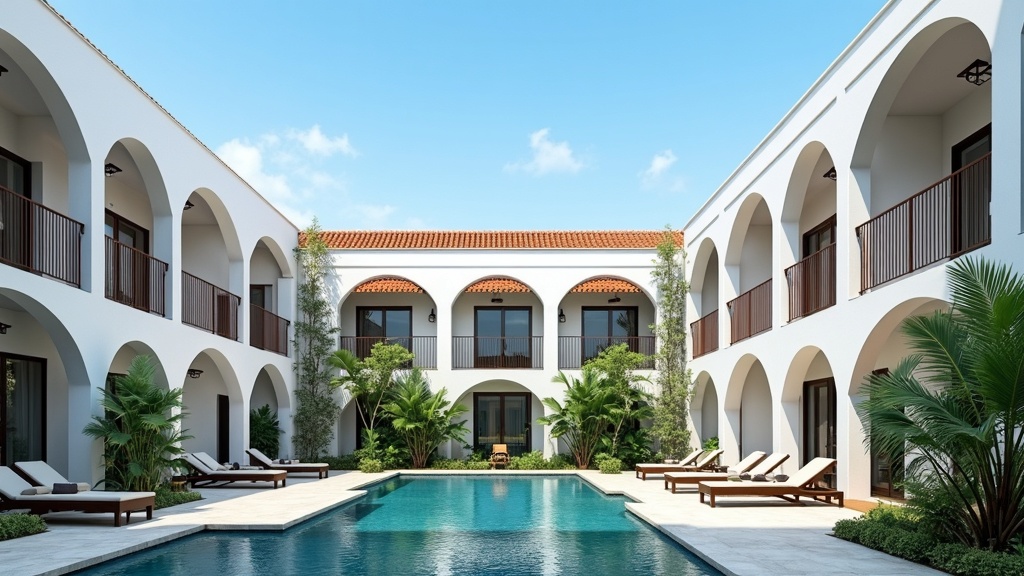
The names below are a map, not a recommendation. Every project sits in a different RERA, possession and pricing position, and the right one for you depends entirely on your use-case and timeline. Use the list as orientation, then have a conveyancer pull current RERA status and possession schedules for any shortlist.
- Expat Vida Goa — a flagship Expat Properties development on the plateau, marketed predominantly as 1-BHK and 2-BHK apartments with carpet areas in the roughly 45–76 sq m band. The most-searched project in the micro-market in 2026.
- Gera River of Joy — Gera’s flagship Kadamba Plateau project, a multi-phase residential community whose resale activity is one of the better proxies for the plateau’s secondary market.
- Naiknavare Esmeralda — boutique mid-rise apartments by a respected Pune-rooted developer; suits buyers who want a smaller community rather than a 500-unit complex.
- Manglam Casa Amora and Casa Amora 3 — sequential phases by Manglam, a long-running Kadamba Plateau presence; useful as a comparable for phase-on-phase price progression on the plateau.
- Prescon Ikigai — a younger project with a wellness-led positioning; indicative of how branding is evolving on the plateau as buyers mature beyond pure square-footage shopping.
- Alcon Serenity Avenue, Sardesai Mayflower Enclave, Hindustan Serene Hills, Four Seasons Perola — additional active developments that round out the project map.
For each project you shortlist, the four things to verify before anything else are: the current RERA Goa registration and quarterly progress report; the title chain on the land; the original Conversion Sanad (formal conversion of land-use to residential); and the encumbrance certificate. A clean answer on all four is non-negotiable. Anything murky here is a reason to walk away.
Who Kadamba Plateau Actually Suits
The plateau isn’t for everyone — and being honest about that is more useful than the usual brochure language.
- Working professionals relocating to Goa — yes, this is the strongest fit. Daily access to Panjim offices, a real schooling and healthcare grid, and apartment stock that’s built for year-round living rather than monsoon-shutter holiday occupancy.
- NRIs wanting a hybrid primary-and-rental Goa base — yes, particularly for buyers who want a Goa address without the security and maintenance headaches of an isolated coastal villa. Apartment-format ownership in a gated project is much easier to manage from abroad.
- Pure capital-appreciation investors with a 5–10 year view — likely yes, because the plateau is structurally short on land and structurally close to Panjim. But the returns will look like a maturing urban market, not a coastal speculation play.
- Buyers chasing beachfront views or rental-yield maximisation on short lets — no. The plateau is inland, the rental market is mostly year-round leases at modest yields, and the holiday-let economics live elsewhere — see our wider villa investment and rental yield guide for that segment.
- Heritage-property and Portuguese-villa hunters — no. The plateau’s character is modern residential. The heritage stock sits in Old Goa, Panjim’s Fontainhas, and a handful of Salcette villages.
What the Rental Story Really Looks Like
Rental yields on the plateau are honest rather than spectacular. The market for 2- and 3-BHK apartments runs on twelve-month leases to working professionals — bank staff, IT and consulting employees in the Panjim and Porvorim belt, hospital administrators, professors at the regional campuses, and remote workers who treat Goa as their primary base. The blended gross yield range for well-located, well-managed apartments in current Kadamba Plateau projects sits in the broad 3.5%–5% band, with newer luxury stock at the lower end and older mid-segment stock at the upper end.
That’s lower than what a well-positioned coastal villa can pull in season-led short-let mode. The trade-off is that the plateau’s yield is year-round, lease-anchored and far less management-intensive. Over a five-to-ten year hold, it’s the capital appreciation component — not the rental — that most investors here are really underwriting.
If you plan to let, line up: society NOC for tenancy, a written eleven-month leave-and-licence agreement (registered if longer), local police verification, and a property manager if you’re out of Goa more than two months a year. None of this is unusual — but skipping any one of the four reliably creates disputes.
The Risks Nobody Puts on the Brochure
- Supply overhang in specific quarters. The plateau has multiple large developers building at the same time. Phases with overlapping possession schedules can compress short-term resale and rental pricing for that specific segment. Look at the upcoming supply pipeline within a 1 km radius of any unit before you sign.
- Title and Sanad issues on older parcels. Some plots on the plateau still carry historical zoning legacies from the industrial-era layout. Conversion Sanad and current Form I and XIV are non-negotiable.
- Water and power load. Apartment-density growth has outrun some of the older municipal water infrastructure. Larger gated communities solve this with private bore-wells and STPs, but verify both for any project you consider.
- Traffic at peak hours. The single-arterial connection down to Panjim is genuinely congested during morning and evening peaks. Test-drive at 9 am and 6 pm before you commit.
- Resale liquidity in slow markets. The plateau has a healthy secondary market, but it isn’t as deep as Panjim or Porvorim. Plan a 6–9 month resale window in a flat market, not 6–9 weeks.
What to Check Before You Make an Offer on Kadamba Plateau Real Estate
- RERA Goa registration number for the project and the developer; cross-check the project’s quarterly progress report on the regulator’s portal.
- Title chain for at least 30 years, supported by an attorney’s title opinion.
- Conversion Sanad confirming the underlying land has been formally converted to residential use.
- Form I and XIV and the encumbrance certificate, both recent and clean.
- Communidade and panchayat NOCs where the parcel sits on, or adjacent to, community-held land.
- Approved building plans from the Town and Country Planning Department, and the Construction Licence.
- Completion / Occupancy Certificate for ready inventory; for under-construction stock, the project’s RERA-declared possession date and the developer’s track record on prior phases.
- Society and maintenance corpus — for ready projects, confirm corpus levels, recent AGM minutes, and any pending capital repairs.
- Loan eligibility on your shortlisted unit with at least two banks; lender willingness is a useful sanity check on title quality.
- Site visit at peak traffic and during monsoon if your timeline permits. The plateau handles both well, but micro-pockets don’t.
Kadamba Plateau in the Wider Goa Investment Map
Where does Kadamba Plateau sit relative to the rest of the Goa property landscape? Think of it as the urban play in a market dominated by coastal lifestyle assets. Anjuna, Assagao, Vagator and Siolim are about coffee, community and short-let yield. Aldona, Saligao and Moira are about character, slow appreciation and primary villas. Mopa-corridor villages — Pernem, Mandrem, Morjim, Mopa itself — are about airport-led infrastructure upside.
Kadamba Plateau is none of those. It’s the address you buy if you want compounding from Panjim’s permanent capital function and Goa’s permanent population growth, with apartment-format ownership and the institutional safety of mainstream developers. It’s the most “Mumbai suburb” thing in a state that mostly defines itself by not being a Mumbai suburb — and that’s precisely why it works for the buyer who wants the Goa lifestyle without the operational complexity of a coastal villa.
For buyers who want a fuller picture of where else in North Goa is currently in motion, our best areas to buy property in Goa guide maps the full grid, and the 2026 Goa property market guide gives the macro backdrop.
One Last Take on Kadamba Plateau in 2026
If you’ve read this far, you already have a sense of what makes Kadamba Plateau different from the rest of the Goa investment map. It isn’t the address you buy for the photograph.
It’s the Kadamba Plateau Goa address you buy because the maths quietly works — Panjim is land-locked, the plateau is the natural release valve for that city’s population pressure, and the developer pipeline is deep enough that price discovery is honest.
For an Indian or NRI buyer evaluating Kadamba Plateau alongside a coastal villa or an Anjuna apartment, the right question isn’t which one is “better”. The right question is which one solves your actual use case.
For the buyer who wants a Goa primary or hybrid base without operational headaches, Kadamba Plateau is hard to beat. The plateau also pairs sensibly with a remote-job pivot, because daily-life infrastructure here is genuinely lived-in, not aspirational.
For the latest RERA Goa filings, possession-progress disclosures and developer registration status across Kadamba Plateau projects, the authoritative source is the Goa RERA portal.
Pull every shortlisted project’s registration and the latest quarterly compliance update before you make an offer on Kadamba Plateau. If anything is missing or stale, that’s usually a signal worth listening to.
A final note: the Kadamba Plateau Goa thesis is structural, not seasonal. The plateau will keep absorbing professional households as Panjim densifies and the Mopa corridor matures, and that compounding demand is what underwrites the long-term return.
What is the pin code of Kadamba Plateau in Goa?
The primary pin code for Kadamba Plateau is 403206. Some older addresses on the plateau still use the 403001 Panjim grid. Always confirm the pin code on the title document and society records of the specific project you’re buying into.
How far is Kadamba Plateau from Panjim?
Central Kadamba Plateau is about 10 minutes from Panjim’s Atal Setu approach by road, and roughly 15 minutes from Porvorim. The Manohar International Airport at Mopa is 60–75 minutes via NH-66; Dabolim Airport is 35–45 minutes depending on traffic.
Is Kadamba Plateau a good place to live in Goa?
Yes — particularly for working professionals, NRIs returning to India, and families who want apartment-format living with strong daily-life infrastructure (hospitals, schools, public transport) and proximity to Panjim. It’s less suited to buyers who want beachfront views or short-let yield maximisation.
What rental yield can I expect on a Kadamba Plateau apartment?
Gross rental yields on well-located, well-managed Kadamba Plateau apartments typically sit in the 3.5%–5% band, with newer luxury stock at the lower end and older mid-segment stock at the upper end. These are year-round, lease-anchored yields rather than seasonal short-let yields.
Can NRIs buy property in Kadamba Plateau?
Yes. NRIs can buy residential and commercial property in India, including Kadamba Plateau, under the general FEMA permission, with payments routed through NRE or NRO accounts. Agricultural land is restricted. For the wider step-by-step NRI process, see our NRI property buying guide.
The Bottom Line on Kadamba Plateau Real Estate
If you’re looking at Goa property as a one-shot beach-facing speculation, Kadamba Plateau isn’t the headline. If you’re looking at Goa as a long-term place to live, work, age, or compound capital across a cycle, it might be the single most rationally-priced sub-market on the North Goa map in 2026. The land is scarce. The connectivity is real. The institutional developer presence is deep. And the buyer pool is the most diverse in Goa.
What it asks of you is the same as any maturing urban market: diligence on title, diligence on the specific project, and patience on the rental side. Get those right and the plateau is one of the cleanest expressions of Goa’s structural growth story you can hold in your portfolio.
If you’d like our team to pull a current shortlist of Kadamba Plateau Goa projects matched to your budget, possession timeline and intended use — primary, hybrid, or pure investment — get in touch with Proptys. We work with Indian and NRI buyers across North Goa, and we’ll walk you through the trade-offs honestly before you commit.

Related Posts

Stay Informed With the Latest & Most Important News
Previous Post
Next Post