

Now Reading: Beyond the Noise: Discovering Goa’s Soul in its True Hinterlands
- 01
Beyond the Noise: Discovering Goa’s Soul in its True Hinterlands

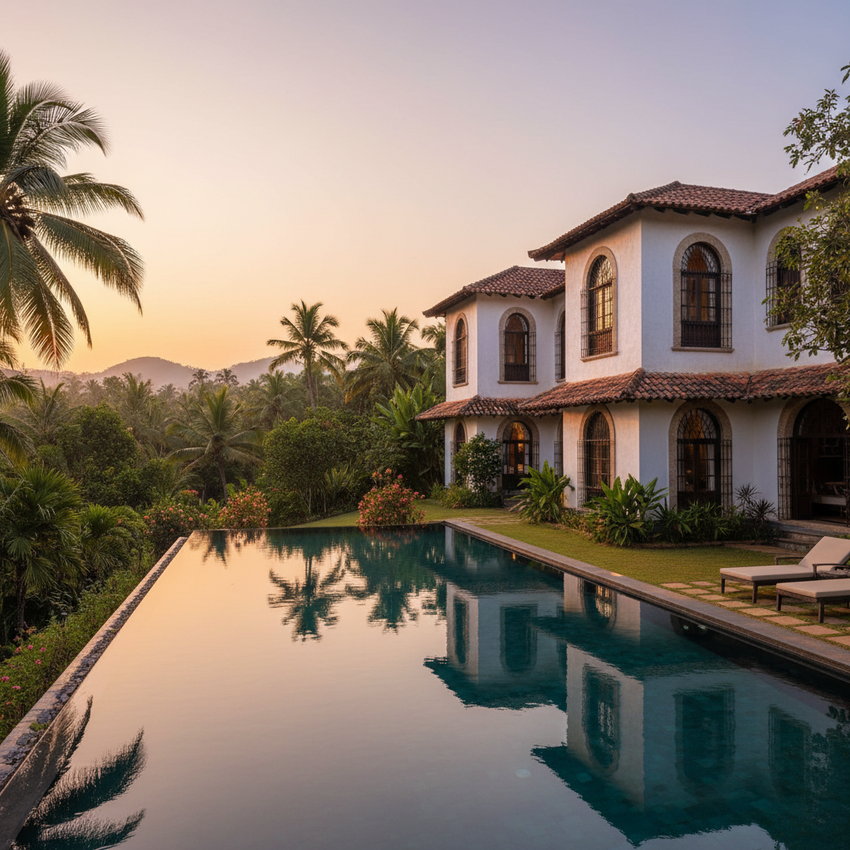
The Search for Susegad
The story of Goan luxury is being rewritten. For years, the narrative was a simple one, written on the beaches of Candolim and in the bustling lanes of Anjuna. But that story has grown tired, its pages saturated with noise and concrete. The discerning investor, the true connoisseur of lifestyle, is no longer looking at the coast. They are turning their gaze inward, past the saturated corridors of Assagao and Siolim, to discover the state’s beating heart: the true hinterlands.
This is not a story about flipping properties. It is a narrative about rediscovering authenticity. It’s about places like Ponda, the state’s cultural nucleus; Sanguem, a vast expanse of emerald-green wilderness; and Bicholim, a strategic gateway to a quieter life. Here, the investment is not just in land, but in legacy. The returns are not just measured in percentages, but in the quality of silence, the purity of air, and the immeasurable value of “Susegad”—a contentment the coast has long since forgotten. As global trends pivot from conspicuous consumption to conscious living, these green sanctuaries are emerging as the most coveted asset class in modern India.
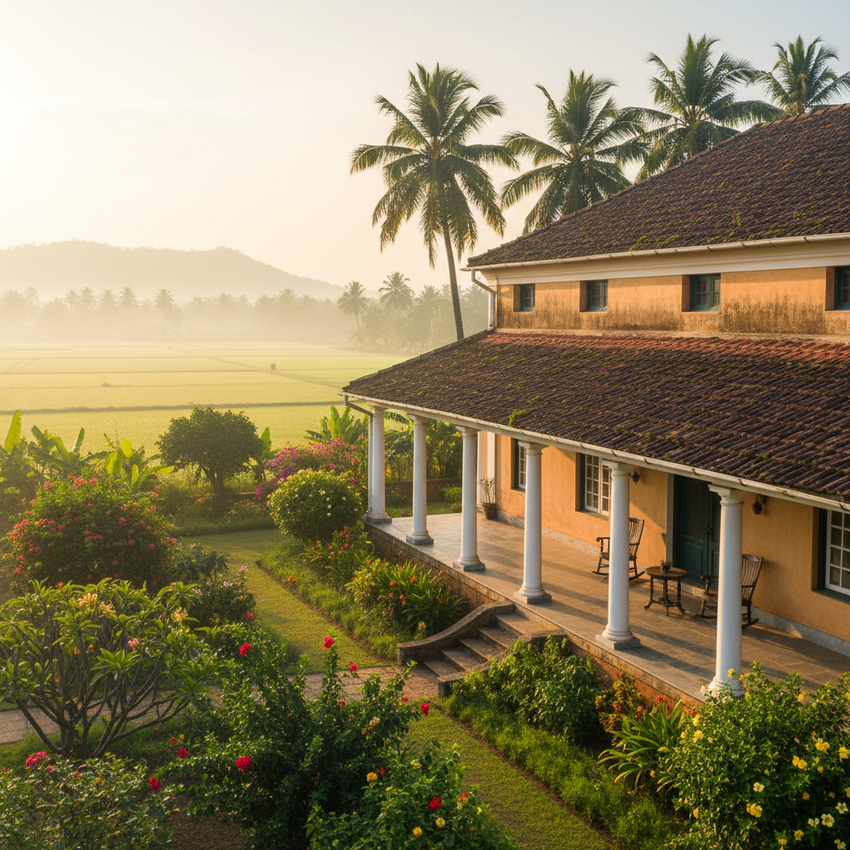
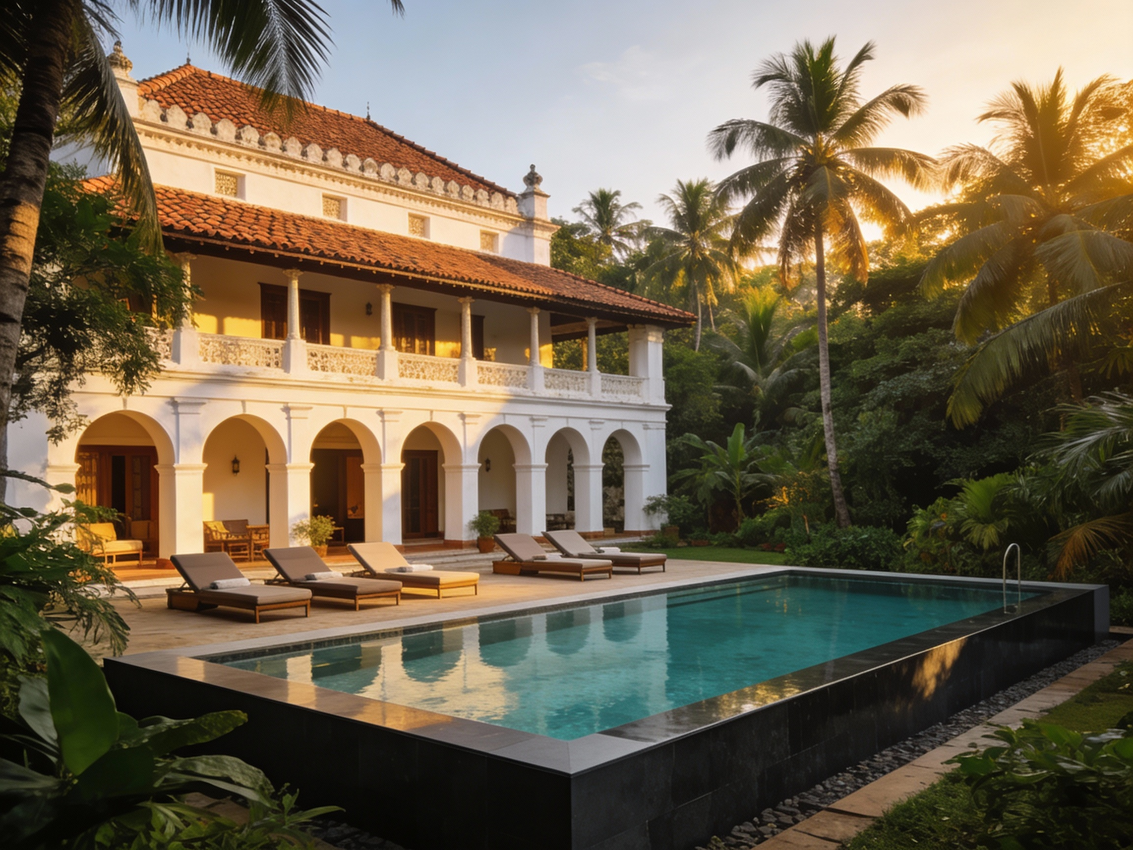
A restored Portuguese heritage home in the serene Goa hinterlands at sunrise
The End of the Beach Party
For the better part of a decade, “investing in Goa” meant one thing: buying a villa or an apartment as close to a beach as possible. The goal was straightforward—capture the tourist overflow, generate a rental yield, and hope for appreciation. This model, however, is fundamentally broken. The very thing that drew people to the coast—its carefree charm—has been eroded by over-construction, strained infrastructure, and the relentless hum of commercialism.
The “smart money” has already moved on. The first wave sought refuge in the leafy lanes of Assagao, Parra, and Aldona, creating a new “hinterland” that has now, itself, become a mainstream, high-priced hub. But the visionary investor is pushing further, seeking not just a buffer from the coast, but a genuine connection to the land and its heritage.
This is the “Great Inward Migration,” a quest for authenticity that is creating a new map of Goan luxury.
The New Map: Goa’s Unexplored Sanctuaries
Instead of a homogenous coastal strip, luxury in Goa is now defined by distinct, character-rich hinterlands, each offering a unique investment thesis.
1. Ponda: The Cultural Heartbeat
Nestled in the geographic center of Goa, Ponda is the state’s spiritual and cultural capital. Dotted with centuries-old temples and aromatic spice plantations, this region offers an investment in heritage. This is not the place for modernist glass cubes; it is a canvas for restoring magnificent old Portuguese and Goan-style manors. The value here lies in preservation. Acquiring a dilapidated heritage property and painstakingly bringing it back to life, as architect Golda Pereira has done on the nearby island of Divar, creates an asset that is not merely rare, but irreplaceable. The investment is in legacy, attracting a discerning clientele who seek cultural immersion over beach parties.
2. Sanguem: The Wilderness Retreat
To the southeast lies Sanguem, Goa’s largest taluka and its green lung. This is the state at its most raw and untamed, a sprawling landscape of rolling hills, dense forests, and the tranquil Selaulim Dam. For the investor aligned with the global wellness boom, Sanguem is a goldmine. The opportunity here is not in small residential plots, but in large land parcels ideal for creating high-yield eco-resorts, organic farmhouses, and exclusive wellness retreats. With farmhouse and eco-resort yields projected to reach 10-15%—significantly higher than the 7-8% in the crowded north—Sanguem offers returns driven by the growing demand for experiential, nature-based tourism.
3. Bicholim: The Strategic Gateway
Connected to the north, but culturally distinct, Bicholim represents a strategic play on the future. The operationalization of Mopa International Airport has been a game-changer, and Bicholim is perfectly positioned to benefit. It offers a quieter, more traditional Goan lifestyle while being within a 45-minute drive of the new international gateway. This has attracted major institutional players like The House of Abhinandan Lodha, whose “One Goa” project is a testament to the region’s burgeoning potential. Investing in Bicholim is a bet on managed growth—capturing the upside of Mopa’s connectivity without succumbing to the chaotic overdevelopment of the old coastal belt.
Redefining ROI: Return on Involvement
The old model was passive. You bought a property and handed it to a manager. The new model is active; it offers a “Return on Involvement.” The joy and value come from the process itself: working with local artisans to restore laterite walls, curating a spice garden on your Ponda estate, or developing a permaculture-driven menu for your Sanguem eco-lodge.
This hands-on approach delivers a richer lifestyle and, paradoxically, a stronger financial return. Authenticity has become the ultimate luxury, and guests will pay a premium for it.
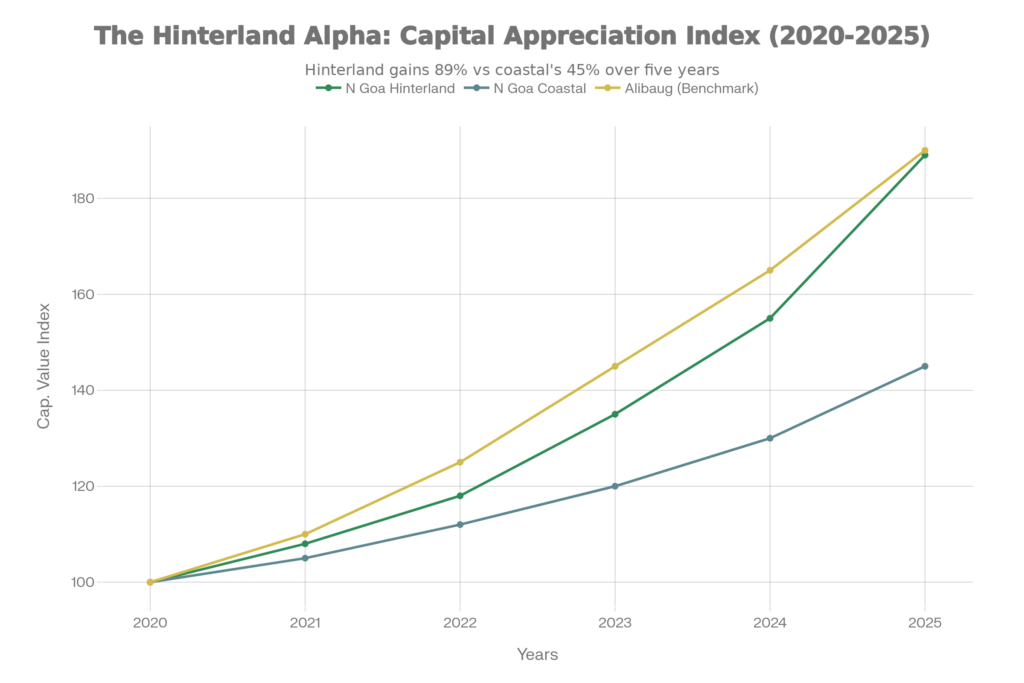
The Yield Spectrum: Where to Find Value in Goa’s Real Estate Market (2025)
As the chart above illustrates, the most compelling yields are no longer found in conventional properties. The true financial alpha lies in creating unique, experience-driven destinations in the emerging hinterlands.
Case Studies: Blueprints for the New Goan Dream
1. The Heritage Arbitrage Play: Divar Island
Just a short ferry ride from Old Goa, Divar Island is a microcosm of the true hinterland’s potential. Architect Golda Pereira’s restoration of a crumbling, 140-year-old house, Casa Monteiro Dsa, is a masterclass in value creation. By respecting the home’s original structure—its laterite rock foundation, high ceilings, and Mangalore-tiled roof—while sensitively integrating modern comforts like functional bathrooms and a courtyard, she transformed a forgotten relic into a priceless piece of living history.
The investment wasn’t just in cement and steel; it was in preserving a story. The result is an asset with a waiting list of admirers, its value measured not in square feet, but in its soul. This blueprint is now being replicated in the heritage-rich villages of Ponda.
2. The Eco-Yield Powerhouse: A Sanguem Farmhouse
Consider the case of a Mumbai-based HNI who acquired a 5-acre parcel in rural Sanguem. Instead of building a single sprawling mansion, they developed a boutique “organic farmhouse” experience with four independent cottages. By focusing on sustainability—rainwater harvesting, solar power, and a farm-to-table restaurant supplied by their own gardens—they tapped directly into the high-demand wellness market.
During peak season, such unique, eco-conscious properties can command premium rates, generating yields that can approach 12-15%, far exceeding those of a conventional villa rental in the north. The “risk” of being remote becomes its primary selling point.
3. The Strategic Acquisition: A Bicholim Estate
A savvy NRI investor, anticipating the “Mopa ripple effect,” recently purchased a large plot with an old structure in Bicholim. They are not building a holiday home. They are building a long-term asset. The strategy is twofold: first, use the existing structure’s footprint to bypass potential zoning hurdles for new construction. Second, create a high-end, gated enclave that caters to professionals and business owners drawn to the region’s improved connectivity.
It’s a strategic foothold—a bet that as the coastal belt becomes unlivable, Bicholim will become the intelligent alternative for permanent residents, not just tourists.
Pro Tips: The Hinterlands Investor’s Edge
- Embrace the Patina: Do not over-restore. The charm of a 100-year-old home lies in its imperfections. Work with architects who specialize in preservation, not just renovation. Keep the old lime plaster; it keeps the house naturally cool.
- Water is Wealth: In the hinterlands, a perennial well or a robust rainwater harvesting system is more valuable than an infinity pool. Conduct a thorough water audit before purchasing any land.
- The Spice Plantation Synergy: In Ponda, look for properties adjacent to existing spice plantations. The fragrant air and green cover provide a natural “amenity” that no developer can replicate.
- Think in Hectares, Not Square Meters: In Sanguem and Quepem, the real opportunity is in scale. Small plots are for houses; large parcels are for creating destinations. Pool resources with other investors to acquire larger land banks.
- Hire Hyper-Local: Use contractors and artisans from the village itself. Their ancestral knowledge of local materials, laterite stone, and climate-resilient construction is an invaluable asset that architects from Mumbai or Delhi cannot offer.
Risks & Contrarian Perspectives
- The Infrastructure Gap: These are true hinterlands. Roads can be narrow, power supply intermittent, and high-speed internet a challenge. Be prepared to invest in your own infrastructure—solar panels, generators, and satellite internet are not optional, but essential.
- Title Obscurity: Land records in remote villages can be complex and contested. A 30-year title search is the bare minimum. Engage a reputable Goan lawyer who understands the nuances of community-owned lands (“Comunidade”).
- The “Remoteness” Trap: While seclusion is a selling point, extreme remoteness can be a liability. Ensure your property is within a 20-minute drive of a basic town for supplies and medical emergencies.
FAQ Section
Is it safe to leave a restored heritage home vacant for months?
No. These homes need to be lived in. The monsoon climate requires constant upkeep. The best model is to have a trusted local caretaker family living on-site, or to place it with a specialized agency that understands the needs of heritage properties, not just standard villas.
How do you find a good architect for restoration?
Look at their work on Instagram and in local design magazines like Beautiful Homes. Seek out Goan architects who grew up in the state and have a deep, personal connection to its heritage. Their approach will be fundamentally different from an outsider’s.
Are there still undiscovered opportunities available in Ponda?
Yes, but they are not listed on major portals. Finding them requires on-the-ground networking. Spend time in the region, talk to locals in village cafes, and engage a local property scout who has the trust of the community.
Conclusion: The Quiet Revolution
The future of luxury in Goa is quiet. It is green. It is authentic. The mad rush for the coast has created a once-in-a-generation opportunity for those with the vision to look inward. Investing in Ponda, Sanguem, or Bicholim is more than a financial transaction; it is a vote for a more sustainable, more meaningful way of life. It is the chance to build not just a portfolio, but a sanctuary.
For the investor who has seen it all, the ultimate luxury is not a sea view that is shared with a thousand others. It is the view of a misty paddy field from the veranda of a home that has stood for a century, a view that is yours and yours alone. This is the new Goan dream.
Related Posts


Stay Informed With the Latest & Most Important News







Advertisement
