

Now Reading: Where Global Wealth Flows: India’s Best Cities for Real Estate Investors in 2025
- 01
Where Global Wealth Flows: India’s Best Cities for Real Estate Investors in 2025
Where Global Wealth Flows: India’s Best Cities for Real Estate Investors in 2025

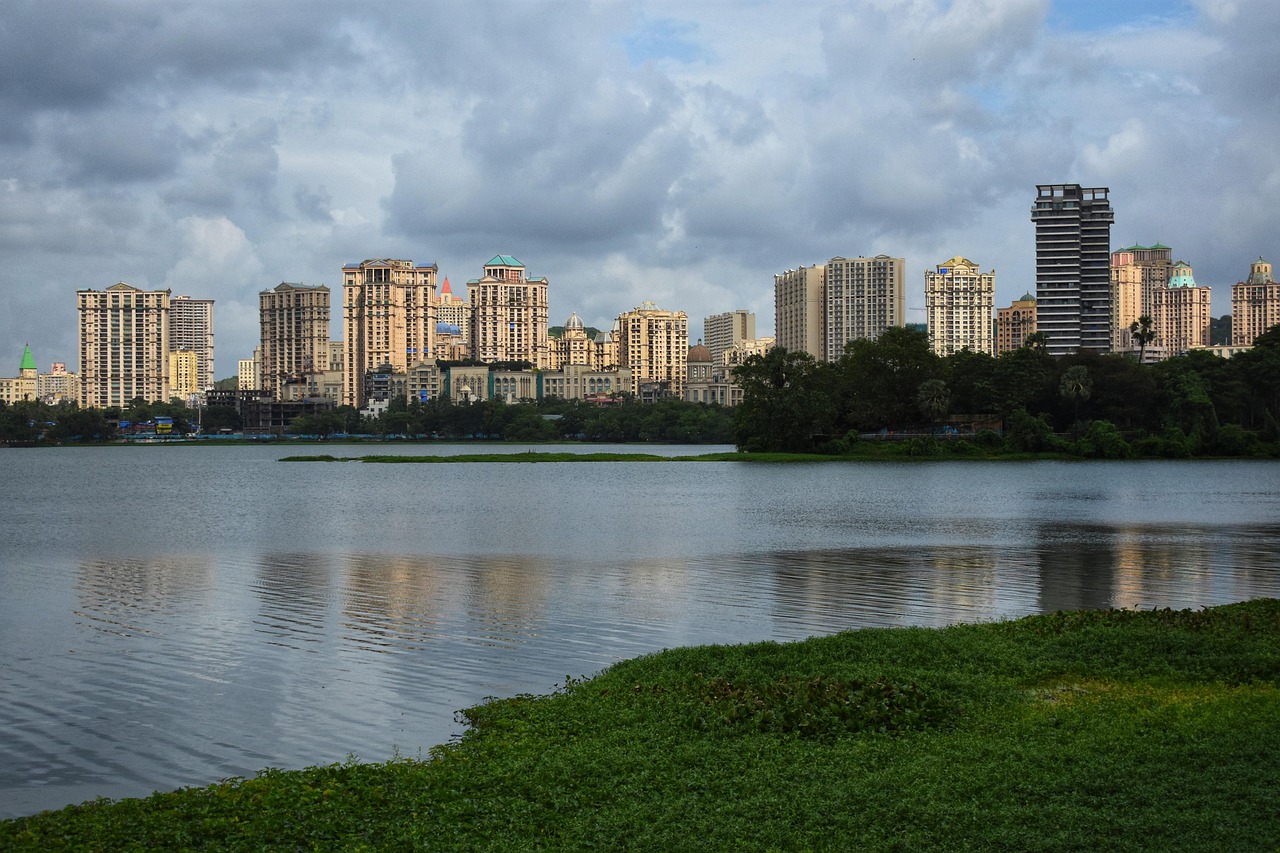
India’s residential real estate has entered a structurally stronger phase, driven by infrastructure delivery, formalisation of the sector, and renewed institutional and NRI participation. Across India’s top eight, best cities, average residential price appreciation ranged between 8–14% year‑on‑year during 2024–25, with select luxury micro‑markets outperforming this average.
Institutional capital flows into Indian real estate reached an all‑time high of approximately USD 8.5 billion in 2025, confirming sustained global investor confidence. Ultra‑High‑Net‑Worth (UHNI) and High‑Net‑Worth (HNI) investors are increasingly concentrating capital in a handful of dominant urban markets where infrastructure completion, employment density, and lifestyle upgrades converge.
Hyderabad, Mumbai, Bangalore, Delhi NCR, and Pune continue to absorb the majority of premium residential demand. Rather than a speculative upswing, current performance reflects measured, infrastructure‑led appreciation, positioning these cities as long‑term wealth preservation and compounding plays rather than short‑cycle bets.
Why India’s Real Estate Moment Is Different Now
The Indian property market has shed its speculative reputation. What’s driving capital inflows today is infrastructure completion—not expectation. The Navi Mumbai International Airport, Delhi-Mumbai Expressway, and Metro expansions across tier-1 cities are tangible catalysts that justify valuation premiums. Add to this the structural shift: NRI wealth returning to India, HNIs seeking portfolio diversification, and global investors exploring frontier markets with emerging market premiums.
The currency advantage—the rupee hovering near ₹90 per dollar—creates a natural tailwind for international buyers. Simultaneously, home loan rates starting at 7.40% p.a. have made leverage accessible without punitive costs. The convergence of these factors explains why 62% of UHNIs and HNIs are planning real estate investments within the next 12–24 months.
For serious investors, India isn’t about chasing the “next boom.” It’s about recognizing that booms have already begun in select markets. The question is whether you’re entering at the inflection point or the tail end of appreciation cycles.
The Five Best Cities Where Capital Creates Compounding Returns
1. Hyderabad: The Emerging Powerhouse
The Numbers: 12–15% annualized capital appreciation with 4–5% rental yields. Over 80% property price growth in the past five years has positioned Hyderabad ahead of Bangalore, Delhi, and Mumbai—a market realignment most global investors underestimate.
What’s Driving It:
The HITEC City corridor now houses Google, Amazon, Microsoft, and dozens of high-growth startups. This isn’t peripheral employment—it’s mission-critical infrastructure for global corporations relocating parts of their engineering operations. Gachibowli, Kondapur, and HITECH City have transformed into genuine commercial ecosystems where residential demand follows employment fundamentals.
The city benefits from something Mumbai lacks: breathing room. Land availability, rational infrastructure planning, and an investor-friendly government create a frictionless environment for development. The Outer Ring Road and Metro Phase II are reducing commute times and unlocking new micro-markets like Tellapur and Kokapet—areas that were rural five years ago.
For UHNI Investors:
Hyderabad’s luxury segment—branded residences and gated villa communities commanding ₹7 crore and above—is experiencing record absorption. Projects like Auro Realty’s integrated townships combine smart home technology, wellness amenities, and security standards that meet global expectations. These aren’t speculative purchases; they’re lifestyle acquisitions backed by appreciating land values and genuine demographic tailwinds.
The rental income is a secondary benefit. A ₹10 crore property in Hyderabad generates ₹4–5 lakh annually (4–5% gross yield), with occupancy rates that rival global cities. For NRIs seeking managed assets, Hyderabad checks boxes that Mumbai cannot.
2. Mumbai: The Irreplaceable Financial Hub
The Numbers: 10–12% annualized appreciation in luxury segments (44% YoY growth in under-construction inventory). Rental yields of 2–3% in prime locations, with certain neighborhoods (Bandra, Worli, Lower Parel) appreciating 30–45% since 2019.
What’s Driving It:
Mumbai’s real estate story isn’t about growth rates—it’s about permanence. As India’s financial capital, Mumbai hosts the headquarters of nearly every major corporation, bank, and financial institution. The stock exchange, foreign institutional investor community, and concentrated wealth create a self-reinforcing demand for premium residential assets.
Infrastructure projects (Coastal Road, Metro Line extensions, Trans Harbour Link) aren’t solving congestion—they’re creating new investment micro-markets. Panvel, Kharghar, and Ulwe in Navi Mumbai are emerging as satellite growth zones with 20–25% appreciation potential over five years, supported by the Navi Mumbai International Airport coming online.
For UHNI Investors:
Mumbai’s luxury market operates in a different economic logic than Tier-2 cities. A ₹15 crore apartment in Worli isn’t an income asset—it’s a capital preservation play with heritage value. These properties trade on scarcity, global benchmark pricing, and the intangible prestige of owning Mumbai real estate.
The sophistication lies in recognizing submarkets. South-Central Mumbai (Bandra, Worli, Lower Parel) commands 9–10% appreciation due to supply constraints and world-class amenities. Western suburbs (Borivali, Andheri) offer 10–12% appreciation with younger buyer profiles. Navi Mumbai presents a pure appreciation play with 20–25% potential as infrastructure matures.
For NRIs managing cross-border portfolios, Mumbai property offers liquidity that Hyderabad hasn’t achieved—and likely won’t for another five years. This optionality has value.
3. Bangalore: The Mature Tech Market with Consistent Returns
The Numbers: 9–12% annualized appreciation with 3.5–4% rental yields. The largest flexible office space inventory in Asia-Pacific and continued IT hiring create stable fundamentals.
What’s Driving It:
Bangalore’s real estate narrative has shifted from “explosive growth” to “reliable compounding.” The IT sector, now employing over 2 million professionals directly and indirectly, provides consistent rental demand. Sarjapur Road, Whitefield, and Indiranagar have matured into gentrified neighborhoods with excellent schools, cafes, and recreational infrastructure.
Infrastructure projects (ORR upgrades, Metro extensions, upcoming airport expansions) are incremental rather than transformative. This isn’t a liability—incremental improvements create consistent price appreciation without speculative volatility.
For UHNI Investors:
Bangalore’s appeal to HNIs and NRIs lies in predictability. A property purchased in Whitefield generates steady 3.5–4% rental income while appreciating at 9–12% annually. Over a 10-year horizon, this compounds to significant wealth creation without requiring active management.
The city’s weakness is supply. Unlike Hyderabad, which still has available land, Bangalore is space-constrained. This limits the addressable market for new luxury inventory but supports pricing power for existing assets. Gated villa communities in Bangalore command premiums that reflect scarcity and established social infrastructure.
4. Delhi NCR (Gurgaon & Noida): Luxury Leads, Fundamentals Follow
The Numbers: 10–15% annualized appreciation in luxury segments, with Delhi NCR accounting for 57% of total luxury housing sales nationally in H1 2025. Gurugram’s luxury rental growth outpaced all metros year-over-year.
What’s Driving It:
Delhi NCR’s luxury market is experiencing unprecedented capital inflows. Sector 150 in Noida, Dwarka Expressway in Gurgaon, and Golf Course Extension areas are attracting ultra-premium projects from nationally recognized developers. The Delhi-Mumbai Expressway and Jewar Airport are transforming connectivity and unlocking new appreciation zones.
Gurgaom’s corporate base—finance, consulting, tech startups—creates rental demand that rivals Mumbai. The city’s lifestyle infrastructure (restaurants, retail, schools) appeals to global expatriates and returning NRIs.
For UHNI Investors:
Delhi NCR presents a currency arbitrage opportunity. NRIs holding USD face a favorable exchange rate (rupee at ₹90+) while accessing financing at just 7.40% p.a. A ₹5 crore property that requires $556,000 at ₹90 rupee conversion becomes an 8–10% annual appreciation play with minimal leverage costs.
The risks are political and infrastructural—expressway delays, metro timeline slippages, and regulatory changes can impact appreciation. However, for investors with 5–10 year horizons, these risks are manageable relative to the return profile.
5. Pune: The Quality-of-Life Play
The Numbers: 8–12% annualized appreciation with 2.5–6.3% rental yields. Strong IT hiring and educational institutions create young professional demand.
What’s Driving It:
Pune occupies the sweet spot between Mumbai’s costs and Hyderabad’s growth. The city’s IT sector is growing, educational infrastructure is world-class, and quality of life metrics (traffic, air quality, green spaces) exceed Mumbai and Bangalore. Young professionals and families increasingly choose Pune as an alternative to expensive metros.
Hinjewadi, Kharadi, and Wagholi are seeing steady infrastructure development. The upcoming Pune International Airport will unlock new connectivity and appreciation potential.
For UHNI Investors:
Pune is a secondary residence and quality-of-life investment rather than a primary capital appreciation play. However, for investors seeking portfolio diversification, steady rental yields, and tax-advantaged returns (long-term capital gains are exempt from indexation benefits), Pune offers genuine value.
The city attracts retirees, educators, and lifestyle-focused investors who value quality over scale. This creates a stable, non-cyclical rental market—ideal for generating passive income with minimal management.
Infrastructure Catalysts: The Structural Growth Engines
Real estate appreciation in India is no longer speculative. It follows infrastructure completion. Understanding these projects—and their timelines—is crucial for investment timing.
Navi Mumbai International Airport : This isn’t delayed anymore. The airport’s opening is creating immediate appreciation in surrounding micro-markets (Panvel, Kharghar, Taloja, Dronagiri). Properties within 15 km of the airport are experiencing 20–25% appreciation, with further upside as terminal operations scale.
Metro Expansions: Across Mumbai, Bangalore, Hyderabad, and Delhi NCR, metro lines are extending connectivity to new residential zones. Each metro station adds 15–25% to surrounding property values within 2 km radius. Investors should map metro terminus locations and identify first-mile residential projects.
Expressways & Road Connectivity: The Delhi-Mumbai Expressway, Chennai Expressway, and Bangalore ring roads are reducing commute times and unlocking satellite cities. Properties along these corridors are appreciating 2–3x faster than non-adjacent zones.
Smart City Missions: Government initiatives in tier-2 cities (Lucknow, Ahmedabad, Jaipur) are creating planned development zones with superior infrastructure. These are long-term plays but offer entry valuations that justify the extended timeline.
The Wealth Cycle: Why 2025–2026 Matters
Between 15–20% of residential real estate investments now originate from NRIs—a sevenfold increase from 2015. This shift reflects structural changes in global wealth distribution and repatriation patterns.
The Macro Picture: NRIs and UHNIs are increasingly seeking:
- Diversification beyond public markets: Real estate provides inflation-hedged, illiquid portfolio diversification.
- Legacy assets in home countries: Generational wealth transfers favor tangible assets in cultural homelands.
- Currency hedging: INR-denominated assets provide natural hedging for NRIs earning in USD, EUR, or GBP.
- Accessible capital deployment: Property offers leverage (home loans at 7.40% p.a.) with tax advantages unavailable in other asset classes.
2025–2026 Timing: The rupee hovering at ₹90/USD creates a 3–4 year window where dollar-earning NRIs get favorable conversion rates. Simultaneously, interest rates are cooling, home loan accessibility is improving, and urban infrastructure is completing maturation cycles. These tailwinds won’t last indefinitely.
For Serious Investors
- Map Infrastructure Before Price: Buy properties 2–3 km ahead of metro terminus stations, expressway interchanges, or airport expansion zones. Wait for infrastructure completion (12–24 months) and sell into appreciation cycles. Timing infrastructure completion gains 40–60% incremental returns.
- Recognize the Rental Yield Trap: Prioritize capital appreciation over income. Rental yield is portfolio ballast, not the primary return driver.
- Layer Leverage Strategically: With home loan rates at 7.40% p.a. and property appreciation at 10–12% p.a., leverage creates arithmetic returns of 15–18% on equity. Use leverage on primary appreciation plays; avoid it on speculative properties.
- Distinguish Luxury from Liquidity: Mumbai luxury assets offer exit optionality that Hyderabad won’t for 5+ years. For concentrated wealth, this optionality justifies a 1–2% valuation premium. For long-term holders, Hyderabad’s appreciation compensates for lower liquidity.
Risks & Contrarian Perspectives
Regulatory Headwinds: Foreign investment caps, FEMA restrictions, and changing tax treatment (long-term capital gains taxation) could impact NRI demand. The most recent Budget didn’t introduce restrictions, but future governments may.
Valuation Fatigue: Peak property prices in metros like Mumbai are approaching global city benchmarks. Mean reversion is possible if interest rates spike or economic growth slows.
Construction & Delivery Risk: Many luxury projects are pre-launch purchases. Developer credibility and escrow management matter more than price appreciation. Invest in tier-1, nationally recognized developers only.
Saturation in Tier-2 Cities: Hyderabad and Bangalore’s popularity is driving supply increases. While demand is strong, overbuilding in peripheral zones could create localized price stagnation.
Currency Risk (For NRI Investors): If the rupee weakens beyond ₹95/USD, repatriation becomes more expensive. Lock in gains strategically when exchange rates are favorable.
Contrarian View: Investors assuming 15% annual appreciation in all cities will be disappointed. Realistic returns are 10–12% in tier-1, 8–10% in tier-2, and 6–8% in tier-3. Time horizon matters more than city selection. 10-15% annual returns; anything below 8% will appear uncompetitive against alternatives.
FAQ Section
Should I prioritize under-construction or ready properties?
Under-construction in infrastructure-catalyzed zones (Navi Mumbai, expressway corridors) for outsized upside. Ready in established neighborhoods (Bandra, Hyderabad IT corridor) for immediate income and lower execution risk. The optimal strategy mixes both.
Is luxury real estate a hedge against inflation?
Partially. Prime location residential assets hold value during inflation but underperform in stagflation (high inflation, low growth). Real estate shines as an inflation hedge when economic growth remains positive
I’m planning to retire to India in 5-7 years. How should my real estate strategy differ?
Think lifestyle first, returns second. A premium villa community in Goa or a luxury apartment in Bangalore’s established neighborhood (Whitefield) that offers immediate rental income and community infrastructure matters more than chasing 15% appreciation in emerging zones. Your property becomes your retirement base, not a trading asset. Consider a primary residence in your preferred city (purchased 2-3 years before retirement for quality-of-life due diligence) and a secondary income-generating property that funds your retirement. This dual approach gives you a chosen lifestyle and financial cushion. Start your property search now while earning, finalize 2-3 years before retirement when you can visit frequently and make informed decisions.
The Next 24 Months
The most sophisticated investors recognize that “the best time to buy was yesterday. The second-best time is today.” India’s real estate market has matured past speculation into genuine wealth-building territory. The cities identified in this guide offer legitimate, infrastructure-supported returns that justify the illiquidity and currency risks inherent in international real estate investing.
The strategic move isn’t chasing the fastest-growing city—it’s building a differentiated portfolio across tier-1 and tier-2 markets that balances appreciation upside with downside protection and liquidity optionality. This is where serious wealth compounds.
YouTube Resources
Related Posts



Stay Informed With the Latest & Most Important News








Advertisement
